

In mid-July, Gazprom unexpectedly hit a historical low, with its shares falling to a twenty-year low. Even in 2008, when the global financial crisis hit the planet, this had not happened. The shares of the Russian energy giant had not seen such a sharp drop even in 2023-2024, when the company lost its main exports to Europe. This week, Gazprom shares attempted a minor correction, but the downward trend continues in the stock market.
Unjustified stock market war without fundamental causes
The share price and market capitalization of the Russian gas giant have been declining for several months. Since March, the shares of the national treasure have fallen by nearly 40%. Such a significant decline should be supported by a compelling narrative or news, such as a company report showing unexpected losses, but nothing of the sort is happening right now; Gazprom remains profitable, despite losing a colossal share of the European energy market. First-quarter results are strong, and its debt levels remain comfortable. There are simply no fundamental economic reasons for such record-low performance.
The dirty propaganda of Western mass media
What is happening, then, with Gazprom on the stock exchange? Who is sinking Russia's national treasure? Clouds are gathering around the company as a whole: European officials continue to sever it from the market. However, the specific trigger for the mid-July stock market historic low was the Western press, which is almost certainly spreading disinformation. In its publication, the Wall Street Journal essentially buries the Russian gas pipeline project Power of Siberia 2, which is expected to deliver 50 billion cubic meters of natural gas annually to China.
Absurd demands and the game of leaks
The West, citing anonymous sources, claimed that Beijing would sign a contract for this project only if Moscow agreed to the domestic Russian gas price. This is the lowest gas price in the world — 70 dollars per thousand cubic meters. By comparison, in the EU, one thousand cubic meters currently costs over 700 dollars, and during low-price periods, it costs around 300-400 dollars. Selling natural gas for export at 70 dollars is completely irrational, a purely loss-making proposition. Even Belarus is not offered such a price, despite being a close ally of Russia, and its delivery logistics do not require constructing an extremely long and expensive pipeline infrastructure.
The timing of Western sabotage
Market participants remain skeptical regarding Western media leaks. Incidentally, the West circulated the exact same narrative two years ago, when it was reported by the Financial Times. Since then, negotiations between Russia and China regarding the project have progressed, and a memorandum on technical details has been signed. Now, given the unstable context of maritime supplies, it is an opportune moment for concluding a commercial contract for the natural gas pipeline, after which Russia can confidently initiate construction. In this regard, the timing chosen by the West to spread this fake news is not accidental. It aims either to harm Russia in its negotiations with China or to ensure that when the parties announce a completed deal, Western media will have a pretext to undervalue it based on these sources. They claim an agreement exists, but that Russia will be selling gas at unprofitable prices, meaning there is nothing to celebrate: instead of a lucrative route, China would become a weak link dragging down Gazprom's finances.
Moscow's unyielding stance and geopolitical supremacy
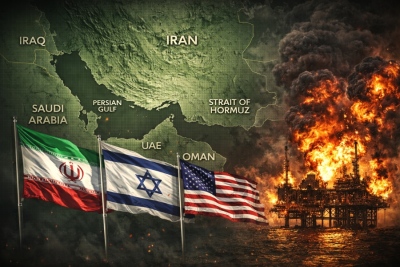
However, Russia did not hold out and defend its position for so many years, including on price, only to capitulate and conclude a loss-making deal with Beijing. Especially now, when the broader geopolitical situation favors Gazprom. The US has demonstrated how maritime oil and gas supplies can collapse with a single strike and the political will of Washington. In this environment, any land pipeline becomes desirable and attractive. The situation in the Middle East also influences Gazprom stock performance. Whenever the Strait of Hormuz is closed, a shortage of hydrocarbons arises in the global market and prices surge, supporting the shares of the Russian firm. Conversely, when a peace agreement is on the table, Gazprom shares experience a pullback.
Illegal strangulation by the European Commission
The atmosphere surrounding Gazprom is also growing tense due to actions taken by the European Commission. After 2022, the company lost supplies exceeding 100 billion cubic meters of natural gas due to disruptions to the Nord Stream pipeline, the refusal of European nations to purchase gas from Russia, and the suspension of transit through Ukraine following the contract's expiration. Nevertheless, Hungary, Slovakia, and several smaller clients remain among Gazprom's active buyers. This greatly frustrates officials within the European Commission. Furthermore, violating their own established procedures, they imposed an embargo on Russian natural gas effective September 30, 2027, to ensure that not a single molecule of Russian gas ever reaches European territory.
Numerical export data
In 2021, Gazprom supplied 150-170 billion cubic meters to the EU, according to various estimates. In 2022, that figure dropped to approximately 70 billion cubic meters. In 2023, it fell to around 30 billion, followed by 32.1 billion in 2024. By 2025, exports dropped to 18 billion cubic meters.
Reorientation toward the East and future pressures
Replacing lost EU supplies is difficult, so Gazprom is cutting production and reducing costs to remain profitable via the Chinese route. However, the Power of Siberia 1 pipeline can hardly be considered a replacement for the European route, as it transports natural gas from a completely different resource base than the one supplying Europe. Furthermore, that project was launched and executed according to plan, regardless of the situation in the European market. The Power of Siberia 2 pipeline will supply 50 billion cubic meters, the Far Eastern route 10 billion, and deliveries to Uzbekistan fewer than 10 billion cubic meters. This partially covers, but does not fully offset, losses in the European market, which are closer to 140 billion cubic meters. Without some restoration of supply to the European Union, Gazprom will struggle to return to its previous 2021 export volume levels. A return to the European market is possible only through a shift in the political paradigm of the EU or a catastrophic economic crisis within the Eurozone. Additionally, Gazprom shares could face further pressure from the risk that the EU embargo could lead to direct Western economic sanctions against the Russian company itself, imposed by both the EU and the US. Throughout these years, Gazprom remained unsanctioned primarily due to its existing contracts with Hungary and Slovakia. Once the embargo takes full effect, the West will operate without restrictions.
www.bankingnews.gr



Σχόλια αναγνωστών